Loading…
Decoration Methods – A Comprehensive Guide
At Promoti, we understand that every product and business is unique, which is why we offer a variety of branding methods to suit your specific needs. Each branding method has its own unique characteristics, suitability for different materials, and cost considerations. This allows businesses to choose the best option based on their specific requirements and budget constraints.
Below, you’ll find a detailed list of the various branding methods we offer, along with their respective Benefits and cons. Whether you’re looking for vibrant colours, intricate detailing, or durable finishes, we have the right solution for you.
Colourflex Transfer
Colourflex transfer is a heat transfer method that involves printing designs onto a special transfer paper using solvent-based inks. The design is then transferred onto the product’s surface using heat and pressure.
- Benefits: Offers vibrant colours, precise detailing, and durability. Suitable for intricate designs.
- Limitations: Limited to certain materials and may not be cost-effective for large quantities.
Debossing
Debossing is a process that creates a permanent indentation of a design or logo onto the surface of the product. It is achieved by pressing a metal die into the material, resulting in a sunken impression.
- Benefits: Provides a classy and elegant look, especially on leather and paper products. Durable and long-lasting.
- Limitations: Limited to certain materials and may not be suitable for intricate designs.
Digital Label
Digital label printing involves using digital printers to print designs directly onto adhesive labels. These labels can then be affixed to various products, offering versatility and customisation options.
- Benefits: Offers high-resolution printing, versatility, and the ability to print variable data.
- Limitations: Labels may peel over time, especially on products subject to wear and tear.
Digital Packaging Print
Digital packaging printing involves using digital printing technology to directly print designs onto product packaging materials such as boxes, cartons, and bags. It allows for high-quality, full-colour printing with precise detail.
- Benefits: Allows for intricate designs, customisation, and short print runs.
- Limitations: Can be cost-prohibitive for large quantities, and the print quality may vary depending on the packaging material.
Digital Print
Digital printing involves transferring designs from a digital file directly onto the surface of the product using inkjet or laser printers. It is suitable for small batches and offers high-quality prints with vibrant colours.
- Benefits: Offers high-quality prints with vibrant colours, suitable for small batches and intricate designs.
- Limitations: May not be as durable as other methods and can be costly for large quantities.
Direct Digital
Direct digital printing is a method where designs are printed directly onto the product’s surface using specialised digital printers. It eliminates the need for transfer materials, resulting in high-resolution prints with precise detailing.
- Benefits: Provides high-quality, full-colour printing with excellent detail and clarity.
- Limitations: Limited to certain materials and may be costly for large quantities.
Embroidery
Embroidery involves stitching a design onto fabric using specialised embroidery machines and thread. It creates a textured, raised surface and is commonly used for logos and branding on apparel and accessories.
- Benefits: Offers a professional, textured look that is durable and long-lasting.
- Limitations: Limited to fabrics and may not be suitable for intricate designs or small text.
Imitation Etch
Imitation etching replicates the look of traditional etching by applying a design onto the product’s surface using various methods such as printing or engraving. It provides a sophisticated appearance similar to etching at a lower cost.
- Benefits: Provides a sophisticated appearance similar to etching but at a lower cost.
- Limitations: May not have the same depth and permanence as actual etching.
Laser Engraving
Laser engraving utilises laser technology to etch designs onto the surface of the product. It offers precision and versatility, allowing for intricate designs and detailed markings on materials such as metal, wood, and acrylic.
- Benefits: Offers precise, permanent designs with a high level of detail.
- Limitations: Limited to certain materials like metal, glass, and wood. May not be suitable for intricate designs on small surfaces.
Pad Print
Pad printing involves transferring designs onto products using a silicone pad. The design is etched onto a plate, inked, and then transferred onto the product’s surface using a silicone pad. It is suitable for irregular surfaces and offers good colour reproduction.
- Benefits: Suitable for irregular surfaces, offers good colour reproduction, and is cost-effective for large quantities.
- Limitations: Limited to certain materials and may not be as durable as other methods.
Resin Coated Finish
Resin coated finish involves applying a clear resin layer over a printed design to enhance its appearance and durability. It provides a glossy, professional finish and protects the printed design from scratches and abrasions.
- Benefits: Provides a glossy, professional finish and protects the printed design from wear and tear.
- Limitations: Requires additional processing time and may add to the cost of the product.
Rotary Digital Print
Rotary digital printing is a method used to print designs onto cylindrical or curved surfaces. It involves rotating the product while printing, allowing for continuous printing around the surface. It is commonly used for printing on bottles, tubes, and other curved objects.
- Benefits: Suitable for printing on bottles, tubes, and other curved objects. Offers high-quality, full-colour printing.
- Limitations: Limited to cylindrical or curved surfaces and may not be cost-effective for small quantities.
Rotary Screen Print
Rotary screen printing involves transferring designs onto products using a cylindrical screen. Ink is pushed through the screen onto the product’s surface, creating vibrant prints with excellent colour saturation and detail.
- Benefits: Offers vibrant colours and is suitable for printing on various materials, including textiles and plastics.
- Limitations: Setup costs can be high, and it may not be suitable for intricate designs.
Screen Print
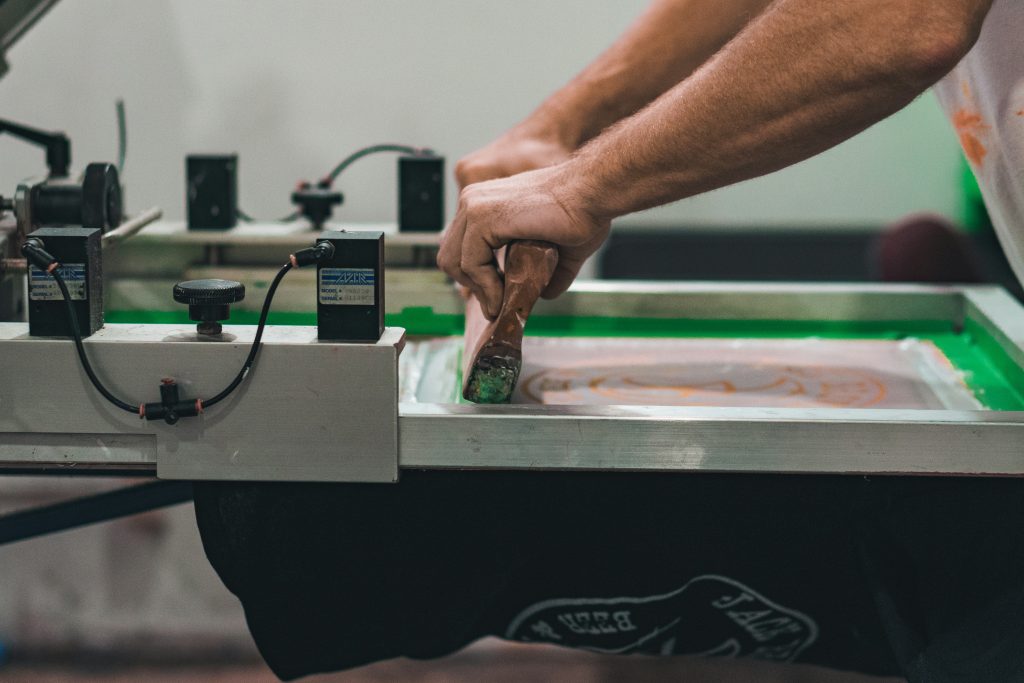
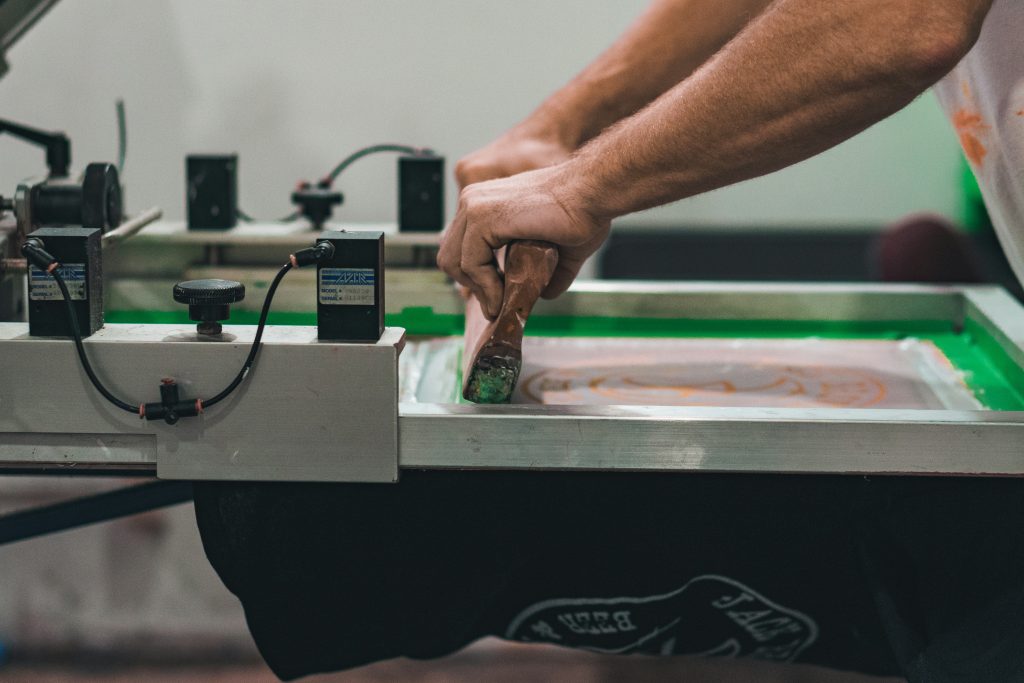
Screen printing is a method where ink is pushed through a mesh screen onto the product’s surface. Each colour in the design requires a separate screen, and the ink is applied layer by layer. It is cost-effective for large quantities and offers vibrant colours.
- Benefits: Cost-effective for large quantities, offers vibrant colours, and is suitable for a wide range of materials.
- Limitations: Not suitable for intricate designs, and setup costs can be high for multiple colours.
Silicone Digital Print
Silicone digital printing involves printing designs directly onto silicone products using specialised digital printers. It provides high-quality, durable prints suitable for products like wristbands, phone cases, and silicone accessories.
- Benefits: Provides high-quality, durable prints suitable for products like wristbands and phone cases.
- Limitations: Limited to silicone materials and may not be suitable for all products.
Sublimation Print
Sublimation printing involves transferring designs onto products using heat and pressure. Specialised inks are used to print the design onto transfer paper, and then heat and pressure are applied to transfer the ink onto the product’s surface. It offers vibrant, long-lasting prints with excellent colour reproduction on polyester-based materials.
- Benefits: Offers vibrant, long-lasting prints with excellent colour reproduction, especially on polyester-based materials.
- Limitations: Limited to materials that can withstand heat and may not be suitable for dark-coloured or non-polyester fabrics.